Spirit Script Font for Handmade Creators
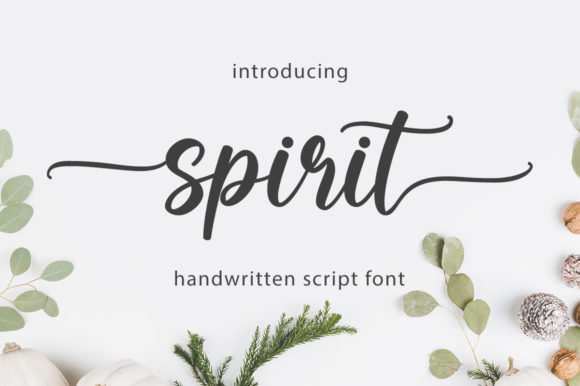
As a maker who designs printable wedding suites, hand-poured candle labels, and boutique gift tags, I’ve learned that the right script font doesn’t just look pretty—it builds trust, signals quality, and quietly tells your customer *this was made with care*. That’s exactly what Spirit does. It’s not fussy or overly ornate, but delicately refined—a true premium script font that balances elegance with clarity. Its fine strokes, subtle contrast, and graceful rhythm make it feel both timeless and intentional.
Spirit lives in that sweet spot between expressive handwriting and polished typography. Unlike some script fonts that blur into illegibility at small sizes, Spirit maintains readability even on 8mm sticker labels or delicate tea-light tags. I’ve used it for lavender-scented soap labels (printed at 6pt on kraft paper), custom wedding welcome boards (cut from walnut veneer with my Cricut Maker), and digital planner covers sold as instant-download printables—each time, customers commented on how “soft yet sophisticated” the lettering felt. That’s Spirit’s quiet power: it elevates without shouting.
What makes Spirit especially practical for crafters is its thoughtful design system. It includes stylistic alternates and contextual ligatures—think of the way the lowercase f and i connect seamlessly, or how the capital S has a gentle upward swirl that works beautifully on greeting cards or boutique packaging. Because Spirit is PUA encoded, every alternate and swash appears reliably in design software like Cricut Design Space, Silhouette Studio, and Canva—no missing glyphs, no frustrating workarounds. You get full control over flow and flair, whether you're crafting SVG files for t-shirt transfers or building layered PDF templates for Etsy buyers.
I reach for Spirit most often when the project needs emotional resonance: baby shower invitations where softness matters, artisan coffee bag tags that whisper “small-batch,” or farmhouse-style wall art for nurseries and kitchens. It shines in short-form applications—product names, monograms, taglines, titles—but isn’t built for body text. Use it for headlines, quotes, names, and decorative phrases only. For longer blocks (like care instructions on a candle label or ingredient lists on bath bomb wraps), pair Spirit with a clean sans serif—think Montserrat, Lato, or even a subtle serif like Merriweather. That pairing creates visual hierarchy: Spirit draws the eye and sets the mood; the supporting font delivers information with quiet confidence.
Real-world examples that work consistently well:
- Candle & soap labels: Spirit’s light weight and open spacing prevent ink bleed on uncoated kraft or matte sticker stock—even when printed at 9–10pt.
- Wedding stationery: Used for names and dates on foil-stamped invitations, Spirit adds luxury without competing with engraving or embossing details.
- Digital printables: Planner headers, quote pages, and habit trackers gain warmth and personality—without sacrificing scannability on tablet screens.
- Mugs & totes: When converted to vector paths (SVG or DXF), Spirit cuts cleanly on heat-transfer vinyl, especially at sizes 1.5" and up. Avoid ultra-thin swashes for large-scale apparel—stick to the standard characters for best results.
- Seasonal packaging: I’ve used Spirit for holiday cookie box tags and spring bouquet sleeves—it reads as festive but never childish, refined but never cold.
Readability tips matter—especially when your designs go from screen to physical product. Always test Spirit at your final output size before cutting or printing. On small stickers (under 1"), skip ligatures and use the basic character set. For signs cut from wood or acrylic, increase letter spacing slightly (tracking +20–40) to preserve legibility at arm’s length. And if you’re designing for mockups—say, a Shopify banner or Instagram story preview—preview Spirit in both light and dark mode backgrounds. Its fine hairlines can fade on low-contrast settings, so adjust stroke weight or add subtle shadow if needed.
Spirit belongs to the Script Amp collection, which means it’s crafted specifically for makers—not just designers. That shows in the file formats included (.OTF, .TTF, and often .WOFF for web use), multilingual support (covering Western European languages), and smart encoding that plays nicely with both desktop apps and browser-based tools. If you’re building Canva templates for other sellers, or bundling fonts with SVG bundles on Etsy, Spirit integrates smoothly—and its commercial license clearly permits use in physical products, digital downloads, client work, and merchandise (always verify the specific license terms, but Spirit is built for real business use).
One thing I appreciate as someone who’s burned hours troubleshooting font issues: Spirit doesn’t require advanced typographic knowledge to use well. You don’t need OpenType panels open to get great results. But when you do dive in—switching to an elegant alternate capital A, enabling the flowing “&” ligature, or swapping in a swashy terminal y—those details become your signature touch. They’re what make your printable wedding suite feel bespoke, your candle brand feel intentional, your shop feel distinct in a crowded marketplace.
In a world where handmade goods compete on both heart and presentation, Spirit is more than a font—it’s a consistency tool. It helps your brand voice stay cohesive across stickers, social posts, packaging, and printables. It invites pause. It feels human. And for creators who pour thought into every detail—from soy wax ratios to kerning adjustments—that alignment between craft and typeface? That’s where real connection begins.